
Democratizing Medical Research Opportunities
Connect.Collaborate.Publish.
Where tomorrow’s clinicians become today’s researchers. MedNex connects aspiring clinicians with world-class mentors to design, deliver, and publish impactful research. Always free. Always accessible.

0+
Survey responses

0+
Clinicians & students

0+
Major projects

0+
Countries
The MedNex Fellowship
Empowering the next generation of clinical researchers: from question to publication.
MedNex is proud to offer a structured, fully mentored research fellowship designed for students and early-career clinicians who want to make meaningful contributions to healthcare innovation. This comprehensive program provides more than just a research opportunity. It delivers a complete educational journey that equips participants with the essential skills, dedicated support, and professional recognition needed to publish high-impact work in clinical research.
What Fellows Gain
Comprehensive Research Training
Participants develop expertise in identifying compelling research questions, designing robust methodologies, conducting rigorous data analysis, and crafting publication-ready manuscripts. The program covers the complete research lifecycle from conceptualization through dissemination.
Dedicated Mentorship
Fellows work closely with experienced researchers and practicing clinicians who provide individualized guidance throughout each stage of the research process. Our mentors bring diverse expertise across multiple healthcare disciplines and research methodologies.
International Collaboration Network
Join a diverse, open-access community of peers and mentors committed to advancing healthcare through equitable, excellent, and innovative research. Fellows gain access to collaborative opportunities spanning multiple institutions and countries.
Publication and Professional Recognition
Contributors have the opportunity to participate in high-level research publications and receive formal academic credit for their work. Recognition may include co-authorship, contributor acknowledgment, or lead investigator roles depending on the level of involvement and contribution.
Begin Your Fellowship Journey
Applications are now open for the MedNex Fellowship program. Qualified candidates are invited to submit their applications through our online portal.
Explore our impact
Highlights from social channels and publications.
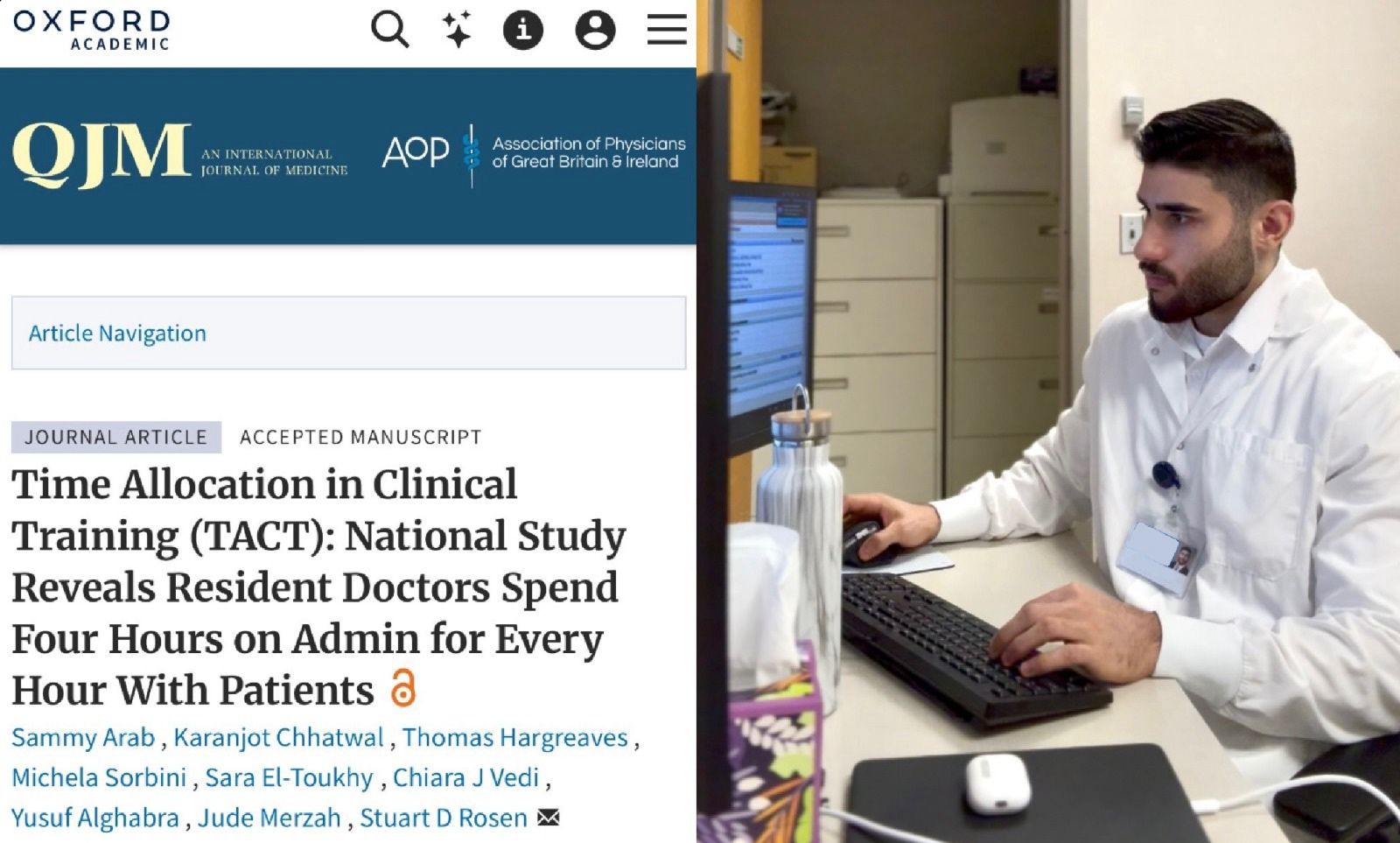
National study reveals that UK resident doctors spend four hours on administrative tasks for every hour of direct patient care, highlighting a critical imbalance in clinical training and the urgent need for reforms to reduce paperwork and improve patient contact.

As reported in the Daily Express, the TACT study tracked 137 junior doctors across NHS hospitals, finding that only 18% of their time is spent with patients, while over 70% is devoted to administrative tasks such as documentation and chasing results. The findings call for urgent changes, including better IT systems, more support staff, and a national NHS computer system to reduce paperwork and improve patient care.
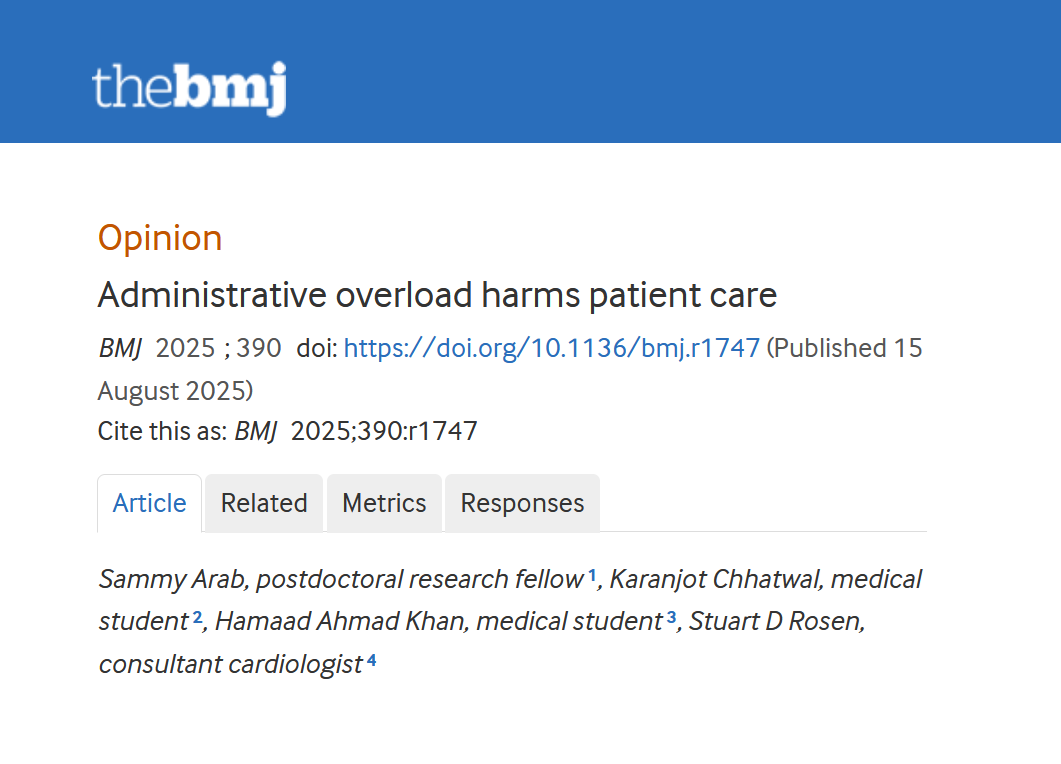
This BMJ commentary discusses the impact of excessive administrative workload on UK doctors, arguing that fragmented electronic health records and clerical demands are undermining clinical training, patient safety, and workforce retention. The authors advocate for system-level reforms, including task redistribution, improved IT infrastructure, and the use of AI to automate routine tasks.

Discussion on the factors driving UK junior doctors to seek training abroad, including administrative overload, limited patient contact, and workforce retention challenges. The post explores the implications for the NHS and the need for reforms to retain talent.

Key statistics from the TACT study are shared, emphasizing the 4:1 ratio of administrative to patient time among UK resident doctors and calling for action to bring clinicians back to the bedside.

BMJ shares the urgent need to reduce administrative burdens and improve IT systems in the NHS, so doctors can focus on patient care and training rather than paperwork.
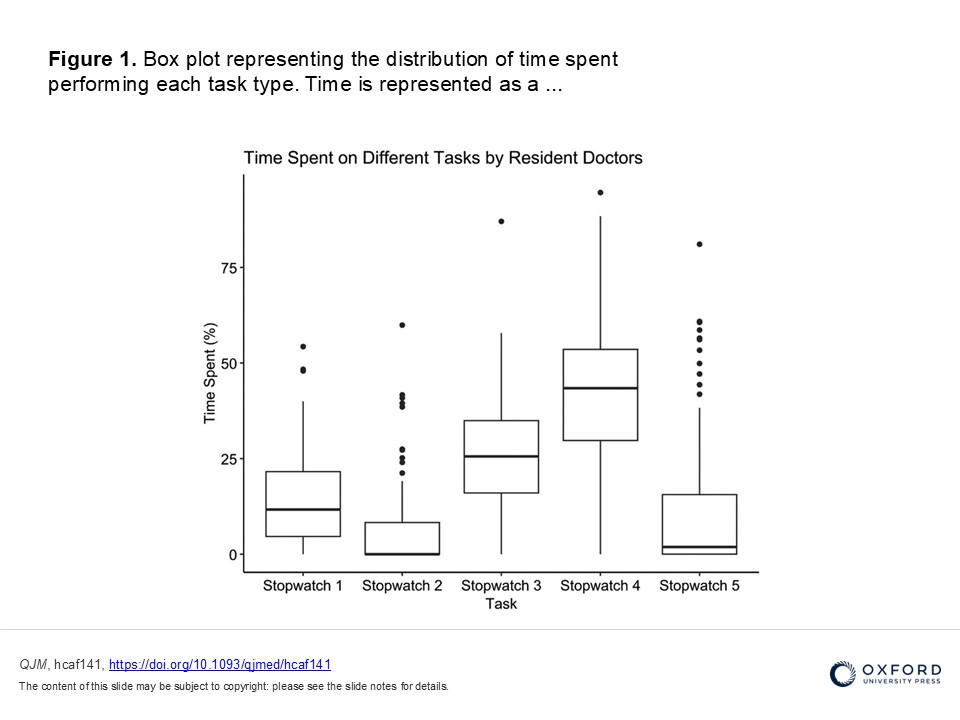
The TACT study, published in QJM, is a national multicentre observational cohort study of 137 UK resident doctors. It found that 73% of their time is spent on non-patient-facing tasks, with only 17.9% on direct patient care. The study highlights significant dissatisfaction among trainees and recommends streamlining administrative duties, integrating digital solutions, and improving mentorship to enhance job satisfaction and healthcare delivery.

A national cross-sectional survey of over 2,200 UK medical students reveals widespread dissatisfaction with the new preference-informed allocation (PIA) system. Key findings indicate that 51.6% view the system as unfair, 76.3% feel a loss of control, and 48.2% are now considering careers outside the NHS, highlighting significant risks to future workforce morale and retention.